Where they are now: Reis Thebault
August 26, 2026
An occasional series on former IRW interns.
Amy Lesemann assigned her middle-school honors English class in Ann Arbor, Michigan, a writing project about recovering from a disaster. She told the group to imitate newswriting.
It was 2006, and Reis Thebault knew exactly what he wanted to say.
He had just watched the “Domecoming,” the first New Orleans Saints game in the Louisiana Superdome more than a year after Hurricane Katrina’s storm surge broke the city’s levees and left 1,400 dead and thousands displaced. “It was one of those rare sporting events where the play on the field actually meets the moment,” he said.
So Thebault wrote about it.
Lesemann liked the article, and she told him he should be a reporter. Her feedback had an impact.
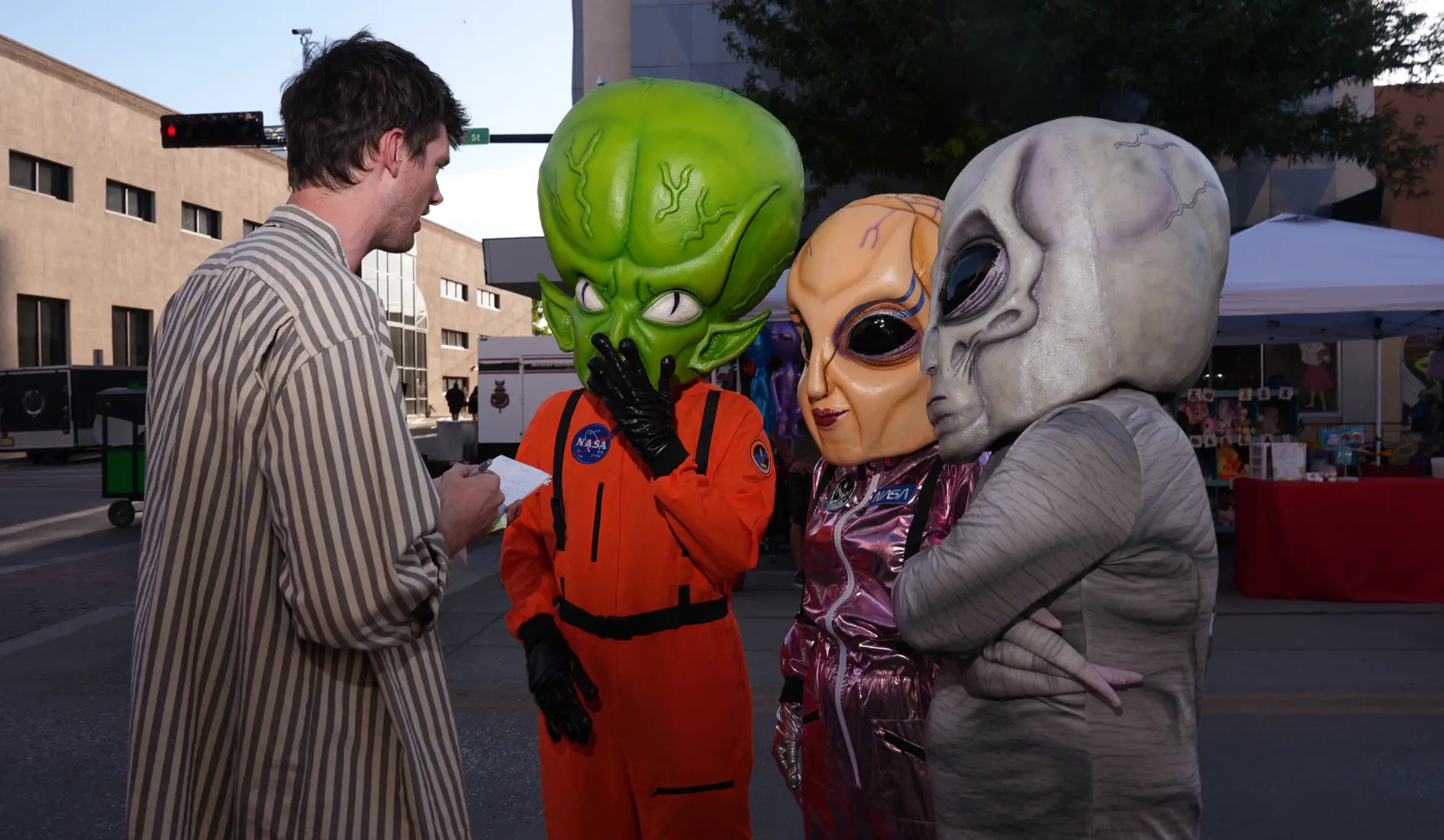
Twenty years later, Thebault is covering the Southwest United States as a reporter for The New York Times.
There were a couple of steps in between. In high school, Thebault wrote for two years on his school's paper, exposing the discrepancies between the men's and women's basketball teams’ uniforms, angering the athletic director.
He joined The Miami Student, Miami University’s newspaper, his first day on the Oxford, Ohio, campus. He remembers feeling a sense of privilege and responsibility when given the opportunity his freshman year to interview the university president. Thebault went on to earn a master’s degree at the University of California, Berkeley. In the summer of 2017, between the first and second year of his graduate program, he landed in Washington, D.C., interning at the Investigative Reporting Workshop.
It was Donald Trump’s first term in office. “Big earth-shaking political moments were happening basically every day, and were happening just down the street from our newsroom,” said Thebault, who remembers watching the television with fellow interns when Trump announced he was withdrawing from the Paris Agreement.
As an intern, Thebault worked on Fatal Force, The Washington Post’s police shootings database, and he helped write an installment of the long-running Pulitzer Prize-winning project that documented how many people nationwide the police shot and killed.
Thebault also did data analysis and remembers sitting across from the Post’s Steven Rich, whom Thebault describes as “one of the nation's best data journalists.” Thebault showed Rich his code. “I was starstruck,” Thebault said. “I felt at that moment like I had arrived in the world of national journalism.”
Thebault earned an internship on the Post's Metro desk the following year, and later moved to the general assignment team, where he covered each day's breaking news. He describes that job as a “trial by fire, an exhilarating, fast-paced reporting experience.”
Four years of covering everything from natural disasters to mass shootings prepared Thebault to be a national correspondent. He moved to California and covered the West Coast, where he wrote about news relevant to a national audience, from battles over resources and climate change to U.S. House and Senate races.
In January of 2026, Thebault pivoted to The New York Times and moved again, this time to Arizona, to cover the Southwest. Thebault likened his new position to being the Times’ “eyes and ears” in the desert. “I get to live out in the country and still write about the big themes that are roiling and reshaping America,” Thebault said, “and that's very rewarding.”
Thebault has been experimenting with using some of the Times’ vast reporting resources to connect with larger audiences.
Recently, he and a Times photographer traveled to the small Arizona town of Marana, where a data center and an ICE detention center were slated to open. In addition to writing a traditional story about the town, Thebault recorded a reporter video in which he explained part of his reporting process. He said going forward, he will “continue to make use of the Times’ expansive storytelling resources by trying to do more visually driven creative story formats.”
Back in Ann Arbor, Lesemann, now a watercolor artist and ceramist, still reads all of Thebault’s articles.
“I’ve tracked his progress all the way along, because it's such a thrill to watch a good writer blossom,” she said in a recent interview. “It's a joy to watch. It's so exciting.”
—Profile by Avi Paulson