‘Everything is a
puzzle to be solved’
Joe Stephens
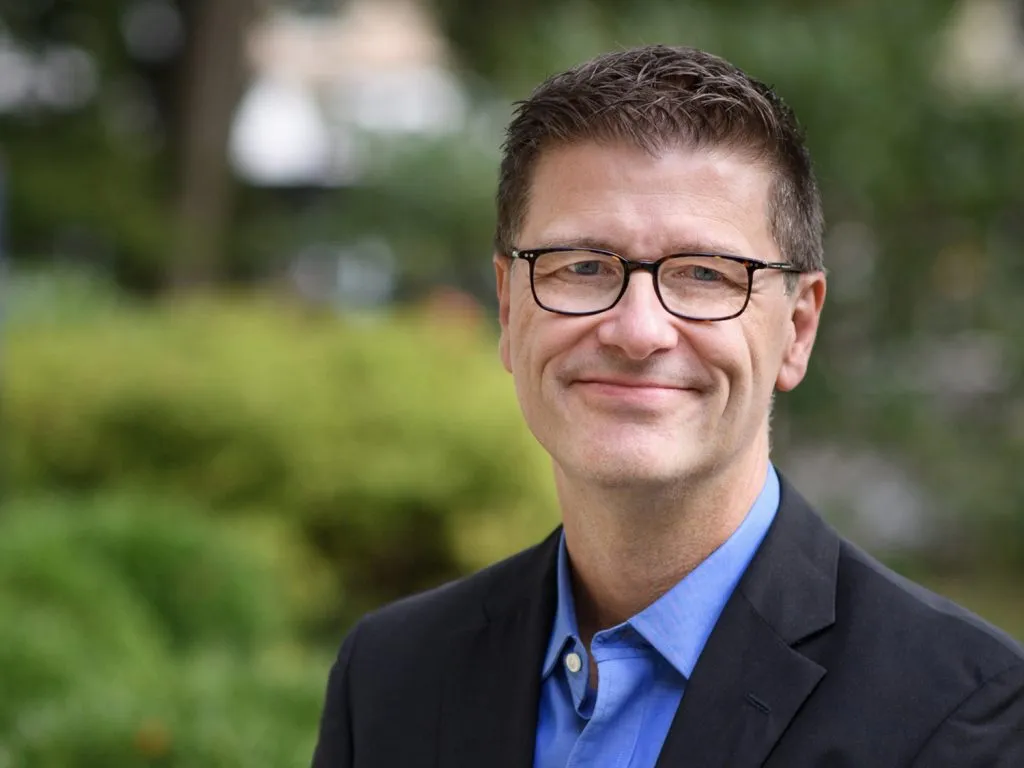
Joe Stephens is a former award-winning investigative reporter at The Washington Post who has spent the last 10 years growing the journalism program at Princeton University and guiding his students’ work to publication at a host of major news organizations. Stephens will join the Investigative Reporting Workshop later this spring as the new executive editor. He talked recently with IRW’s Samantha DeAngelis. This interview has been edited for clarity and length.
Q: Where did you begin your career?
A: I grew up in the Midwest and worked at a series of local papers there. After I graduated from college, I talked my way into a job as editor-in-chief of a small weekly newspaper in Ohio. Even though some weeks I was the entire editorial staff, it was a blast. I then ended up in Kansas City doing local and national investigations that sometimes took up to a year. From there, I went to The Washington Post. I quickly found that it is a rare luxury to choose a topic that fascinates you and then spend weeks or months exploring it. Then, if you’re lucky, you push your work out into the world and see it have an immediate impact. There is no thrill like that, and I got the bug. I don’t see journalism as my job, but as my calling.
What topics are you most passionate about investigating?
I’ve always been particularly drawn to accountability stories that seek to right wrongs and expose injustice. Pursuing accountability stories allowed me to travel the world, meet people and learn things that would have been impossible otherwise, in far-flung places like Afghanistan, Nigeria and Guantanamo Bay, Cuba. It's been inspiring to meet courageous sources and selfless whistleblowers, many of whom have taken great risks to make sure the truth is told.
What was something important you learned early in your career?
There are specific skills that you need as an investigative reporter. You need to know how to work with people and convince them to open up. You need to know how to operate in the field and report as an eyewitness. In particular, you need to learn how to obtain and analyze documents and data. That’s how you determine what the facts are, rather than simply taking someone's word for it. For journalists just starting out, more broadly the most important thing is to develop an investigative mindset. Become comfortable asking uncomfortable questions. You don’t want to be cynical but you should be a little skeptical. You need to always think about what’s beneath the surface, be curious about the world and the powers, forces and hidden strings that make the world what it is. I find this to be completely engrossing.
How do you see the world through an investigative lens?
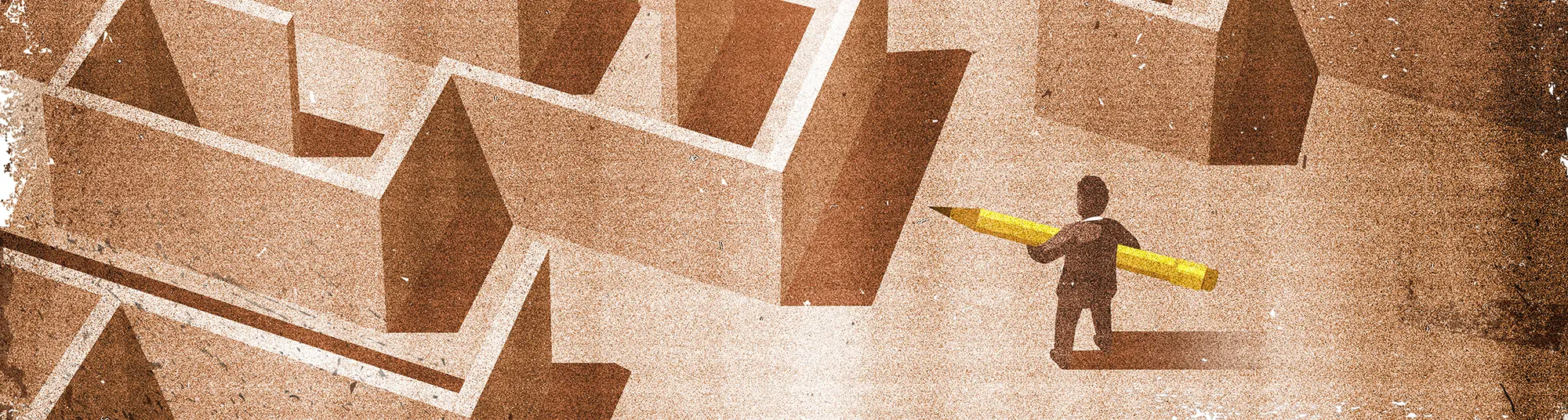
To an investigative reporter, everything is a puzzle to be solved. You look at the world with fresh eyes and ask: Why is it this way? How did it get this way? Who are the people who made it happen? Who are the people who stopped other things from happening? Investigating is like constantly trying to solve a Rubik’s Cube of the universe. So you never get bored as an investigative reporter.
What advice would you give to a journalist today just starting out?
I would say, “Try it out!” Learn by doing and get your hands dirty. That’s why I’m so excited to lead the Investigative Reporting Workshop. At IRW, you don’t just learn the skills of journalism (which are indeed essential). But, more importantly, you learn by actually creating high-impact journalism, working shoulder to shoulder on the front lines with accomplished veteran journalists. I tell anyone who is thinking of starting out to try it out and actually do the reporting and writing, then get your work published. Getting your work published is both energizing and fun. That’s how you learn important skills and get better at using them.
How has the process of writing and investigating stories helped you better understand your own thoughts and perspectives?
Knowing how to tell a story is critical, whether you go into journalism or another field. Investigating and writing are the best way I know of to figure out what you, yourself, actually think about a topic. If I really want to know what I think about something, I’ll sit down and write something. I process my thoughts through writing. That’s powerful on so many levels. So many stories I’ve written have taught me about what I think, especially in long-form investigations. I would work on a story for a year, learn as much as I could, then move to a new story/ topic.
You said in your teaching demonstration that the stories you reported from Nigeria, about Pfizer allegedly violating international law by testing an unapproved drug on children, have resonated even years later. Can you talk more about that?
When I first started at The Washington Post, I spent a year investigating stories about pharmaceutical companies and how they experimented with drugs. I ended up in northern Nigeria looking into a medical experiment that American researchers carried out on children there amid a deadly meningitis epidemic. A number of children died during the course of the experiment. It's been 25 years since I wrote this article, and I still hear from people and get questions about it virtually every week. When the COVID vaccine came out, I got a lot of questions from reporters wanting to know about Pfizer’s record, and that interest revived.
Whose work inspires you today?
So many people! But I have to say, there is one guy in particular. I went to see him speak at a conference when I was right out of college, and it was so clarifying. He was talking about his work, how he did it, how he focused on documents and data, and how he was trying to seek out the hidden forces in society. He didn’t write a couple stories a day like many journalists; instead, he spent months writing and researching. That was a clarifying moment where I realized that I wanted to be that guy and do what he does. His name is James B. Steele. I was lucky enough to speak to him at conferences and meetings, and over the years, he became my friend. He has taught me so much about journalism, life and how to be an ethical and honorable person. I wasn’t the only one inspired and influenced by him; a whole generation of emerging reporters were studying his moves. I’d love to provide these kinds of experiences to AU students both at IRW and in the classroom, repaying what my mentors have done for me over the years.
Also, it’s impossible to talk about inspiring figures without mentioning Charles Lewis. He’s a true pioneer of nonprofit journalism and contributed so much to the profession, especially by founding and running IRW and its sister organizations. He’s a visionary whose work has provided a blueprint for so many others, and all journalists working today owe him a debt.
… What excites me most about joining AU and the Investigative Reporting Workshop is their commitment to getting work out in the world. In some classes, you write a wonderful paper, and your professor is the only one reading it. At IRW, you can get your work into The Washington Post or on air at NPR. People see it, and you have the opportunity to make a big impact on the real world. And maybe make things a little bit better for everybody. That’s what makes it so rewarding.
What is the most unusual thing to happen to you while out reporting?
At Princeton, I used to take students abroad to refugee camps, and we would report out of these camps. One year, we were at a refugee camp listening to stories from Syrian migrants about the poor conditions in which they were being kept; they didn’t have enough food, and the food they did have was spoiled. They also lacked adequate restrooms. While we were talking to the migrants, there was an explosion, and a full-scale riot broke out over the poor conditions. We ended up covering the riot, which was totally unexpected. The riot was raging right next to us as we scrambled to conduct interviews and start framing the stories on the fly. As my students reported, I got on my phone in the middle of the chaos to pitch news outlets on publishing our stories. We were the only journalists there so, to the public, the riot wouldn't have even happened, as far as they knew, if we hadn’t been there to write about it.
If you weren’t a journalist, what job do you think you would be doing?
I can’t imagine doing anything else; it's clearly what I was meant to do. I’ve got to say, I never thought I would leave the investigative team at The Washington Post because it was my dream job. Then I tried out being a professor and realized there’s more than one way to pursue the goals of journalism. One is to labor in the trenches myself. Another way is to take my experience and my skills and share them with students. That became a force multiplier, and working with emerging journalists also turned out to be mind-blowingly fun. I’ve had two of the very best jobs in the world: being an investigative journalist and being a professor teaching the next generation. I’m an incredibly lucky guy.
What does it mean to you to be able to run a newsroom?
I’m over the moon! It's an honor to be able to lead the Investigative Reporting Workshop at a moment where the stakes for journalism and democracy have never been higher. IRW has always understood that you do the best investigative reporting by ensuring it is rigorous, ethical, and in the interest of the public. For 18 years, that’s what this newsroom has done, beginning with Chuck Lewis’s vision for a nonprofit, student-centered investigative lab that produces work with true impact. I just think it’s the most exciting thing on Earth, and I can’t wait to roll up my sleeves and get to work with students and our newsroom partners. It's going to be a complete blast.